Taking a child who is scared of the beach to Hawaii might sound like an odd choice. But for our family, it became one of the clearest examples of why thoughtful family travel is not about waiting for the perfect stage — it is about planning for the family you have right now.
Taking a child who is scared of the beach to Hawaii probably sounds like an odd choice.
Why choose a beach destination when one of your children is genuinely frightened of the ocean?
But for our family, it made sense — not because we ignored that fear, but because we planned around it.
And honestly, it is one of the clearest examples I have of why I believe family travel is not about waiting for the perfect stage. It is about planning for the family you have right now.
Where the fear started
When my daughter was around one, we travelled to Fiji.
Like many families, we imagined she might love some of the gentle island experiences — the water, the fish, the beach, the tropical setting.
At one point, we took her down to feed the fish, thinking it would be something she would enjoy.
It was not.
It frightened her.
From that point, she became scared of fish in the ocean. In her mind, they were going to bite her.
As she got a little older, that fear expanded. By the time we went to Hawaii when she was two, she was not only scared of fish — she was scared of the waves too.
And this was not just a child who “wasn’t really into the beach.”
She was genuinely distressed by it.
So why did we go to Hawaii?
For a family who loves travel, and especially beach holidays, having a child who was scared of the beach was challenging.
We love Fiji. We love warm destinations. We love being near the ocean.
But suddenly we had one child who loved the beach and another child who could not comfortably go near it.
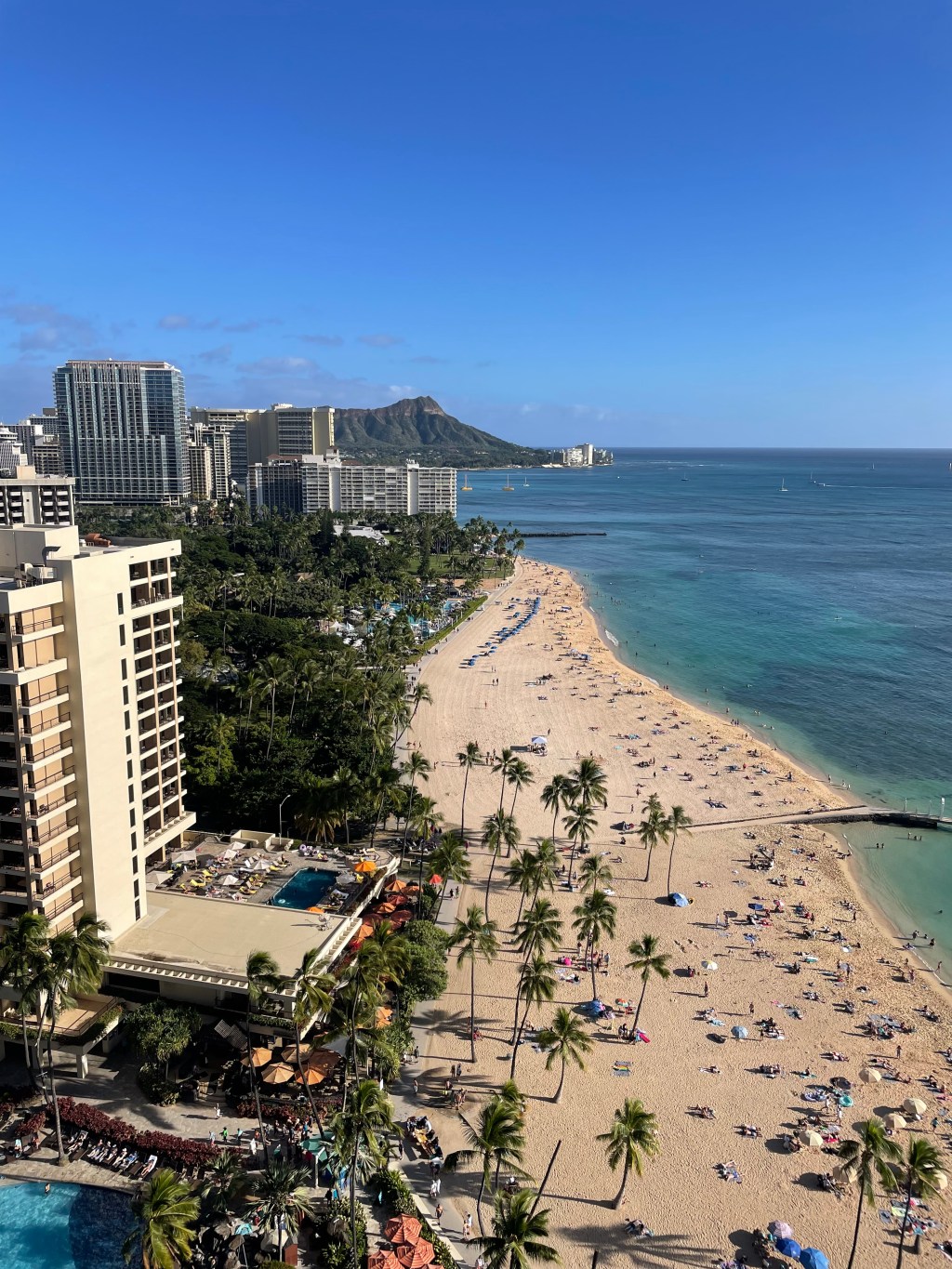
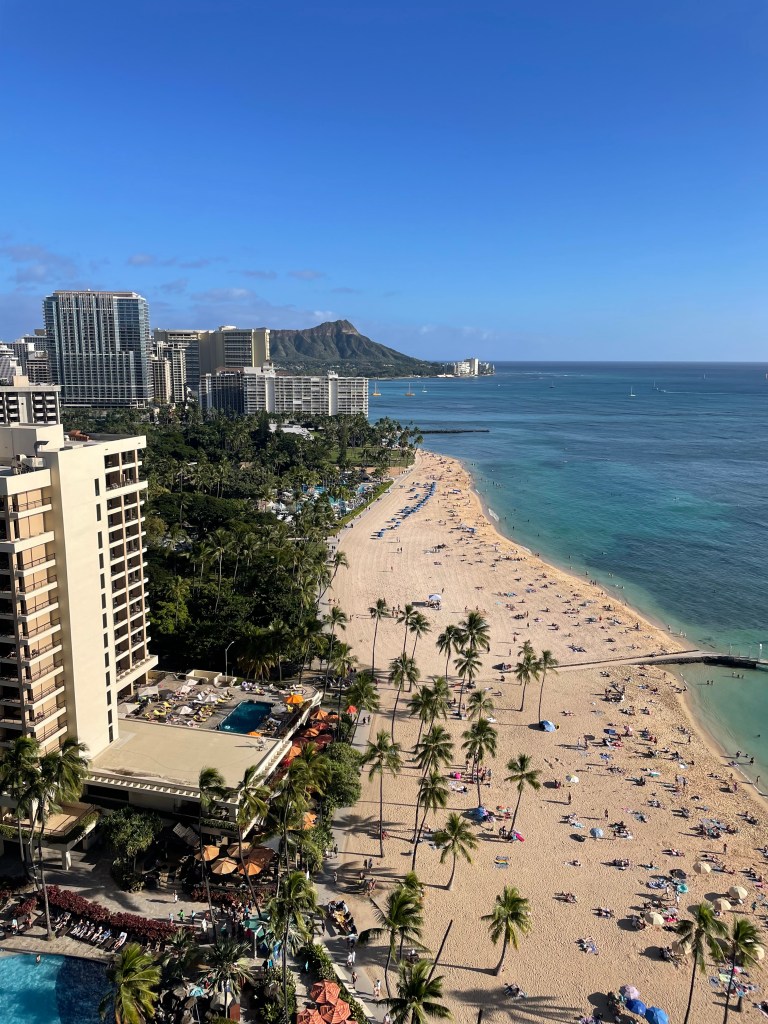
So when we planned Hawaii, we knew we could not build the whole trip around the idea of sitting on Waikiki Beach every day.
That would not have worked for her.
It would not have worked for us.
And it would not have been fair to her sibling either.
At the time, our son was seven. He was high-energy and needed plenty to do. He needed movement, stimulation and activity.
So we were not just planning for a toddler who was scared of the beach.
We were planning for two very different children with two very different needs.
That is why we chose Hilton Hawaiian Village.
We needed options
We chose Hilton Hawaiian Village very deliberately.
At first glance, choosing a beachfront property for a child who was scared of the beach might sound like a strange decision.
But we were not choosing it because we expected her to spend all day swimming in the ocean.
We chose it because it gave our family options.
Our son could still enjoy the beach and the energy of Waikiki.
Our daughter did not have to be forced into the beach before she was ready.
And as a family, we still had multiple pools, a waterslide, resort-style spaces and, most importantly, the lagoon.
The lagoon was the key.
It gave us a gentler middle ground between the swimming pool and the ocean. It was still water. It was still outdoors. It still felt like part of a Hawaiian beach holiday.
But it did not have the same waves or unpredictability that made the beach feel overwhelming for her.
That mattered.
We could still eat breakfast near the beach.
We could still be in that beautiful Waikiki setting.
We could still play on the sand — although at first, that meant being a good distance back from the shoreline.
And then, slowly, the lagoon became a success.
She went in.
It became a positive step back towards the water.
Not because we pushed her into the ocean, but because the environment allowed her to approach it in a way that felt safer and more manageable.

There may never be a perfect stage
That trip taught me something I still come back to often.
There is rarely a perfect stage to travel with children.
It can be tempting to think:
“We’ll travel when they’re older.”
“We’ll go when they’re less anxious.”
“We’ll wait until they cope better with change.”
“We’ll do that destination once they’re ready.”
And sometimes waiting is the right decision.
But sometimes, especially with children, the goalposts move.
The beach became easier for my daughter over time. It took a couple of years, but she did become more comfortable with it again.
But other things changed.
As my children have grown, different challenges have appeared.
For example, kids’ clubs used to be something we looked for. My son once enjoyed them.
Now, the noise, transitions and chaos of some kids’ club environments are much harder for him.
So instead of choosing resorts based mainly on kids’ club access, we now look more carefully at activities, space, movement and other ways to keep him engaged.
That is family travel.
Children change.
Needs change.
Confidence changes.
Sensory preferences change.
What worked two years ago might not work now.
What feels impossible now may become easier later.
So rather than waiting for a mythical perfect window where every part of travel feels easy for every person, I think the more useful question is:
What does this family need at this stage for travel to feel possible, enjoyable and worthwhile?
Planning for the family you have now
For our Hawaii trip, that meant not avoiding the beach completely, but also not relying on the beach as the only source of enjoyment.
It meant choosing a property where one child could enjoy the beach, another could enjoy the pools, and the lagoon could act as a bridge between the two.
It meant accepting that our holiday might not look like someone else’s Waikiki holiday.
And it meant giving our daughter the chance to have a positive water experience without forcing her into one she was not ready for.
That is one of the things I love most about thoughtful family travel planning.
It is not about creating a perfect trip where nothing is ever difficult.
It is about creating enough flexibility, support and options that the family can still enjoy the experience, even when one part of it is hard.
For neurodivergent families, this can be especially important.
Sometimes the barrier is not the destination itself.
It might be the noise, the transitions, the uncertainty, the crowds, the food, the layout, the waiting, or one very specific fear that other people might not immediately understand.
But those things matter.
And they deserve to be planned for.
Because a family is not one traveller.
One child’s dream holiday might be another child’s challenge.
One person may need adventure, while another needs predictability.
One family member might seek stimulation, while another needs space to retreat.
The destination does not always need to be ruled out.
But the planning needs to be honest about who is travelling.
Looking back, I am glad we went to Hawaii when we did.
Not because every moment was easy.
But because we chose carefully, adapted where we needed to, and gave our family a holiday that worked for that stage of life.
And that is still how I think about family travel now.
Plan for the family you have right now.
Not the family you think you should have.
Not the family in the brochure.
Not the family that might exist in two years.
The one travelling with you today.
Planning a family holiday?
If you are planning a family holiday and wondering whether a destination can work with your children’s different ages, needs, fears, energy levels or travel styles, I can help you think through the options.
I specialise in thoughtful family travel planning for families who need more than a one-size-fits-all holiday.
Send me your dates and family details, and we can start planning around the family you have right now.
 travel that fits your family
Leave a comment